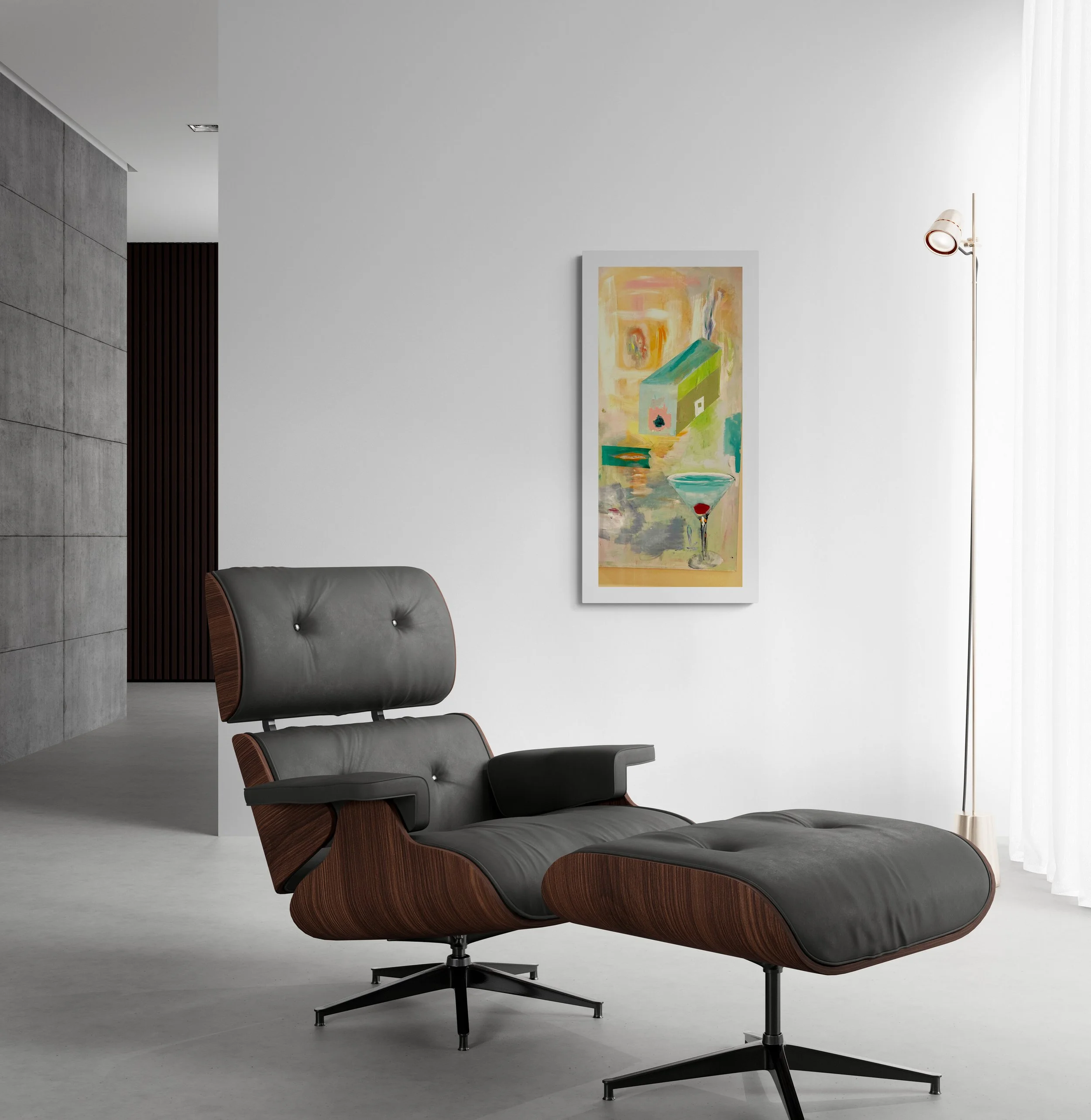
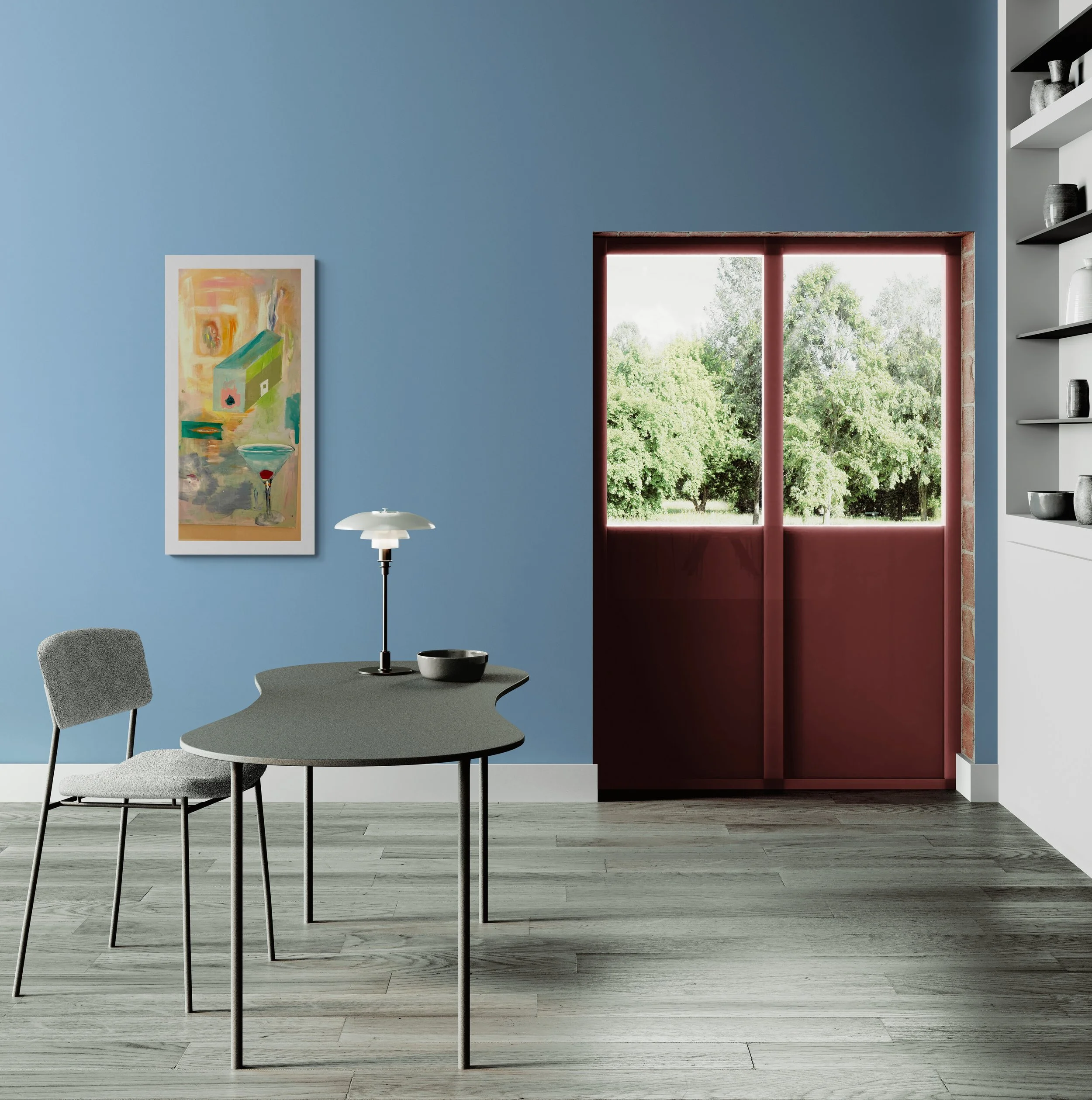
Acrylic painting 24×36
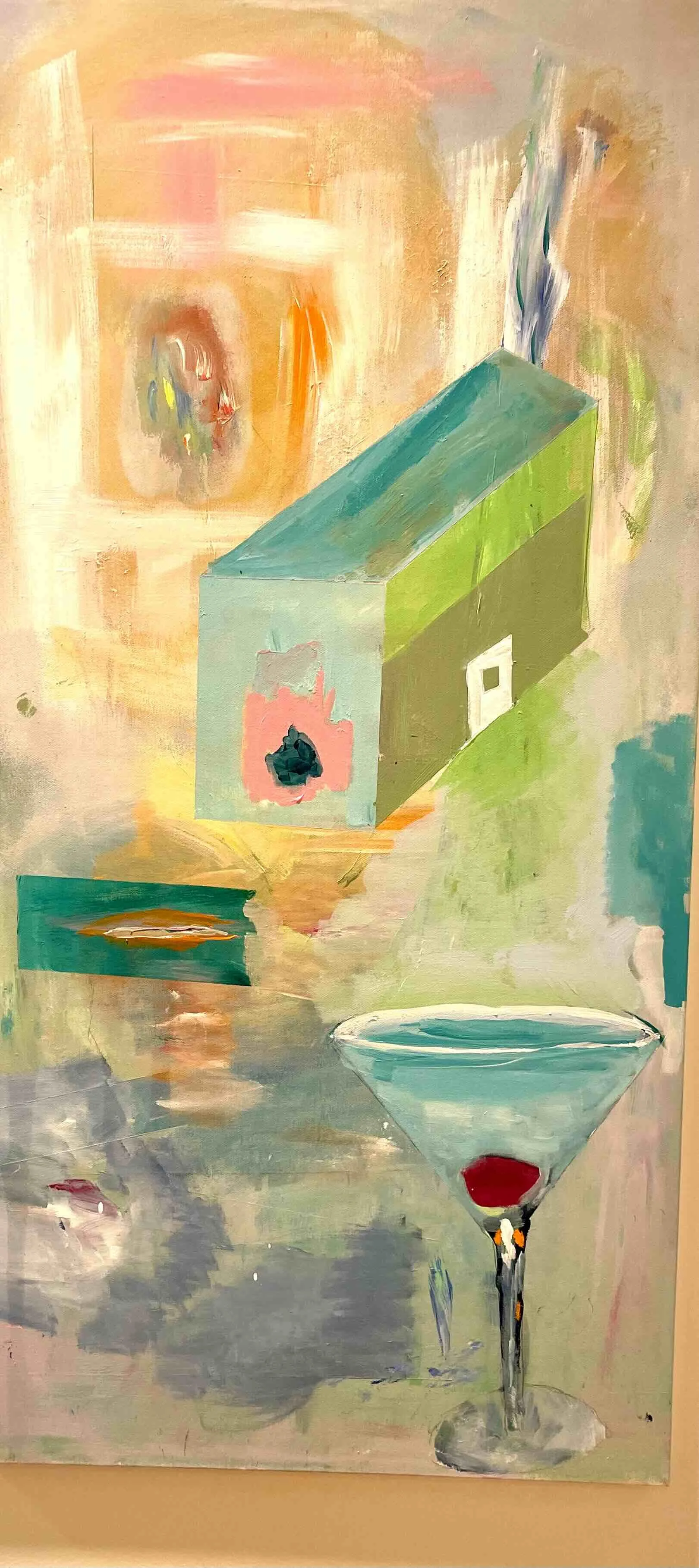
“Home to a Teal Martini” unfolds as a composed collision of color and calm, an abstract exploration of domestic warmth transposed into a cocktail’s cool hue. The canvas centers on a broad field of muted teal — neither aggressively bright nor overly soft — a tone that reads as both refreshing and intimate. Layers of matte and slightly glossy paint create subtle depth across this central plane, suggesting the way light glances off glass and the familiar textures of lived-in rooms.
Around the teal core, bands and fragments of warm neutrals — sand, coffee-brown, and soft ochre — anchor the composition. These earth-toned strokes are applied with varied tools: wide, dry-brushed swaths that reveal underlayers, quick gestural marks that slice through color, and thin washes that bleed at the edges. Together they evoke the contours of furniture, the grain of wooden surfaces, the suggestion of a windowsill catching late afternoon light.
Texture is integral: impasto ridges rise in places to catch shadow, while other areas are scraped back to expose underpainting, producing a tactile history of the painting’s making. The composition balances openness and restraint; negative space allows the teal to breathe, while clustered marks yield a sense of domestic detail without literal depiction.
The overall mood is contemplative and urbane, a quiet evening after guests have left, the residue of conversation translated into color and mark. “Home to a Teal Martini” reads simultaneously as an homage to ritual and to place—the cocktail as a moment of stillness, the teal as the emotional center that returns the viewer to a particular, remembered domestic calm.
.
Acrylic painting 24×36
“Home to a Teal Martini” unfolds as a composed collision of color and calm, an abstract exploration of domestic warmth transposed into a cocktail’s cool hue. The canvas centers on a broad field of muted teal — neither aggressively bright nor overly soft — a tone that reads as both refreshing and intimate. Layers of matte and slightly glossy paint create subtle depth across this central plane, suggesting the way light glances off glass and the familiar textures of lived-in rooms.
Around the teal core, bands and fragments of warm neutrals — sand, coffee-brown, and soft ochre — anchor the composition. These earth-toned strokes are applied with varied tools: wide, dry-brushed swaths that reveal underlayers, quick gestural marks that slice through color, and thin washes that bleed at the edges. Together they evoke the contours of furniture, the grain of wooden surfaces, the suggestion of a windowsill catching late afternoon light.
Texture is integral: impasto ridges rise in places to catch shadow, while other areas are scraped back to expose underpainting, producing a tactile history of the painting’s making. The composition balances openness and restraint; negative space allows the teal to breathe, while clustered marks yield a sense of domestic detail without literal depiction.
The overall mood is contemplative and urbane, a quiet evening after guests have left, the residue of conversation translated into color and mark. “Home to a Teal Martini” reads simultaneously as an homage to ritual and to place—the cocktail as a moment of stillness, the teal as the emotional center that returns the viewer to a particular, remembered domestic calm.
.